 DAKERA
Give every AI agent perfect memory
Dakera builds open-core memory infrastructure so AI agents can remember context across conversations, sessions, and teams — without sending data to third parties.
Why we're building Dakera
AI agents are getting smarter at reasoning, but they keep forgetting. Every time a conversation ends, the context is lost. Teams waste time re-explaining preferences. Customer support bots ask the same questions twice. Multi-agent systems can't share knowledge.
We believe memory is the missing layer in the AI stack. Not a simple key-value store — real memory that understands temporal relationships, supports hybrid retrieval, and builds knowledge graphs automatically.
Dakera is a single Rust binary that runs on your infrastructure. No external APIs, no embedding services, no databases to manage. Install, configure your AI client, and agents start remembering.
88.2% Recall@20 (LoCoMo) · ~90 MB binary (+ ONNX models at startup) · No external APIs · Deploy in under 5 minutes
Read the Quickstart → Join Cloud WaitlistHow Dakera Works
A single binary handles the entire memory lifecycle — from ingestion through intelligent retrieval — with no external dependencies.
Self-hosted first
Your agent memory stays on your servers. No data leaves your infrastructure. Full control over storage, retention, and access.
Zero dependencies
One Rust binary. No Redis, no Postgres, no external embedding APIs. Dakera includes everything: storage, embeddings, retrieval, and knowledge graphs.
Open core
The memory engine is proprietary and free to self-host. SDKs for Python, JavaScript, Rust, and Go are MIT-licensed. Build on Dakera without vendor lock-in.
Production-grade
88.2% Recall@20 on LoCoMo — the standard long-context memory benchmark. Built for real workloads with concurrent agents and high throughput.
Who builds with Dakera
Not a tool for demos. Dakera is built for developers deploying intelligent agents into production who need real infrastructure underneath.
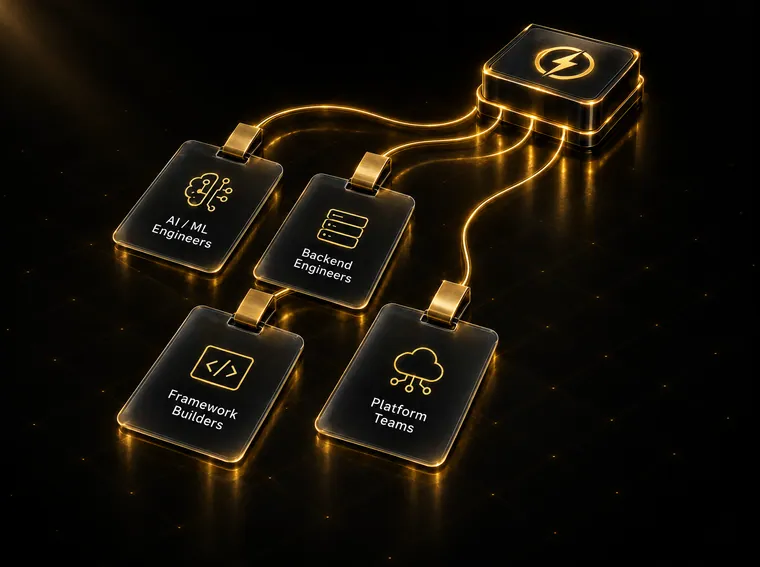

Building production agent pipelines
You ship LangChain or AutoGen agents that need to remember state across thousands of sessions, without duct-taping Redis, Pinecone and a custom decay script together.
- One binary replaces your entire memory stack: vector store, embeddings, session store, knowledge graph
- 88.2% Recall@20 on LoCoMo with hybrid retrieval you can tune per query type
- Native integrations: langchain-dakera, crewai-dakera, autogen-dakera. Drop-in memory classes
Adding memory to LLM features
You're adding an AI feature to an existing product and need a reliable memory layer, not a research project. You care about latency, auth, multi-tenancy and zero new infra to maintain.
- REST API + gRPC: integrate from any language in under an hour, no Python runtime required
- Namespace isolation per user, key-based auth and rate limiting built in. Production-ready on day one
- Designed for low-latency retrieval. Rust with zero GC pauses won't bottleneck your LLM call chain
Integrating LangChain, CrewAI or LlamaIndex
You build tools on top of agent frameworks and need a memory backend that works across all of them: consistent API, framework-agnostic and fast enough for tool-calling loops.
- Identical REST/gRPC API across Python, TypeScript, Go and Rust SDKs
- MCP protocol for LLM tool integration. The same backend serves IDE, API and framework use cases
- Open core: integrate the public API surface without vendor lock-in on internals
Deploying agent infrastructure at scale
You run the platform that dozens of internal teams build agents on. You need multi-tenancy, observability, horizontal scaling and security posture, not a managed service with opaque pricing.
- One instance serves hundreds of agents: namespaced, rate-limited and AES-256-GCM encrypted
- Prometheus metrics + OpenTelemetry tracing out of the box. Plug into your existing stack
- Raft consensus clustering: add nodes, data rebalances automatically. No manual sharding
The team
Dakera is built by infrastructure engineers who've shipped ML pipelines, vector search systems, and distributed data stores at scale — and hit the same wall every time: agents that can't remember. We spent too many hours duct-taping Redis, Pinecone, and custom TTL scripts together and decided to build the thing we wished existed.
Our background is in low-level systems engineering: Rust, storage engines, and retrieval algorithms. Dakera's 88.2% LoCoMo Recall@20 comes from doing retrieval correctly at the engine level — hybrid BM25+vector fusion, importance decay, and on-device ONNX inference — not from bolting LLM reranking onto a vector store as an afterthought.
We believe the best infrastructure is invisible — it just works. Dakera should be as easy to set up as pulling a Docker image, and as reliable as the filesystem underneath it. No managed services, no opaque pricing, no data leaving your network.
Get in touch: via LinkedIn or the cloud waitlist.
Open at the edges. Closed at the core.
We open everything you need to integrate. We keep what makes us fast. You can self-host the engine: the binary is yours to run on your own infrastructure, no outbound user data, no external dependencies. What's closed is the source code, not your right to deploy it.
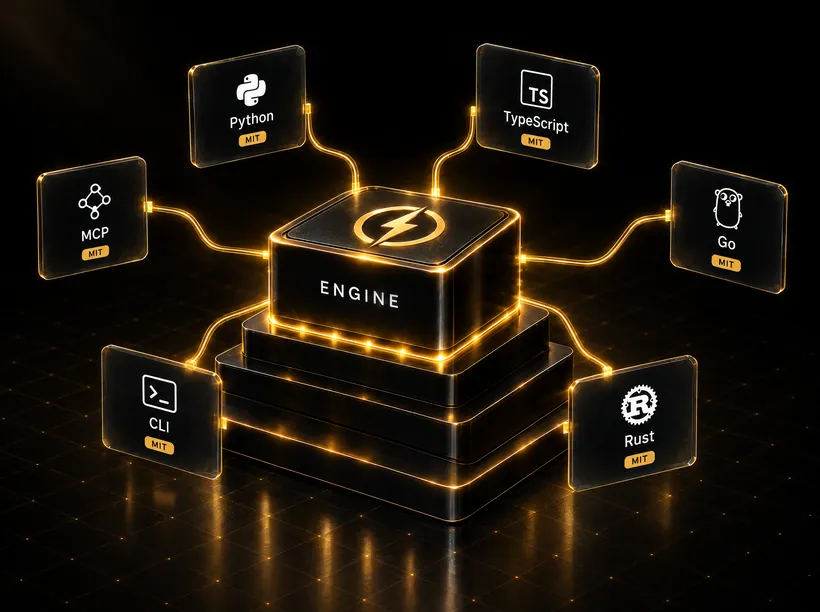
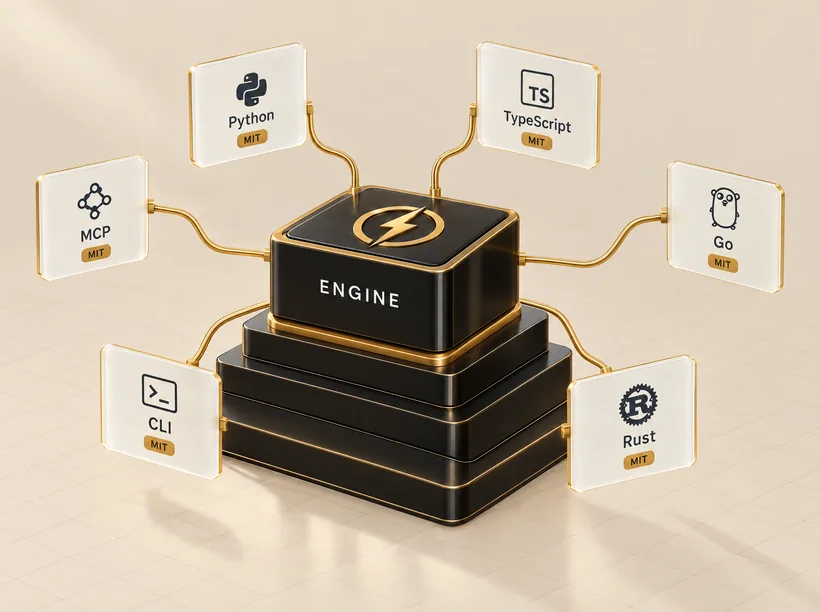
pip install dakera
TypeScript SDKnpm install @dakera-ai/dakera
Go SDKgo get github.com/dakera-ai/dakera-go
Rust SDKAdd dakera to Cargo.toml
CLIdakera-cli · shell-scriptable admin and query
MCP Serverdakera-mcp · 14 core tools (86+ via profiles)
Built with
Deploy in 5 minutes
One binary. No dependencies. Pull the Docker image, set your API key, and your agents start remembering.